Turn kitchen waste, manure and organic matter into clean cooking gas and organic fertiliser. 10,000+ biogas projects across Kerala.
Biogas is produced when organic waste breaks down in an oxygen-free (anaerobic) environment inside a sealed digester. Microorganisms convert carbohydrates, fats and proteins into methane-rich gas — typically 55–70% methane — that burns cleanly for cooking, much like LPG but without fossil fuels.
The leftover slurry, called digestate, is a nutrient-rich organic fertiliser that improves soil health without chemical inputs. For Kerala farms growing rubber, coconut, pepper and vegetables, this closed-loop system turns a waste problem into two valuable outputs: free cooking gas and better crop yields.
Biogas plants range from compact household units fed by kitchen scraps to larger institutional digesters handling hundreds of kilograms of waste daily. Sonetec assesses your waste volume, available space and gas requirement before recommending the right capacity.
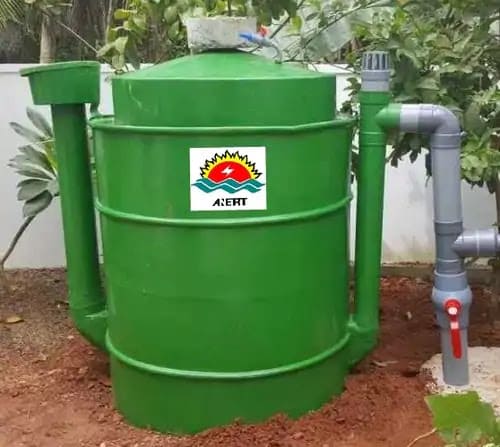
A domestic anaerobic biogas digester processes organic waste without odor or flies, producing two high-value resources daily:
Generates 1.5 to 2.5 hours of hot, smoke-free flame daily. Replaces up to ~0.5 domestic LPG cylinder refills every month (~6.5 kg LPG equivalent, saving ₹450–₹550/mo).
Nutrient-rich liquid bio-fertilizer ready for coconut palms, banana plants, vegetable patches, and terrace garden pots. 100% chemical-free.
Reduces greenhouse emissions and reliance on LPG. Zero combustion during generation.
Keeps waste out of landfills and improves water quality in your community.
Digestate replaces chemical fertilisers — healthier soil and safer food.
Smoke-free alternative to firewood — protects family health.
Simple technology, free feedstock from kitchen and farm waste.
Waste becomes energy and fertiliser — nothing is wasted.
Our installation process is designed for Kerala's climate and waste patterns. We start with a site visit to understand your daily organic waste output — kitchen scraps, cattle dung, agricultural residue — and estimate the biogas yield you can expect.
We then supply and install the digester, gas holder, piping and stove connection. For farm installations, we also advise on slurry distribution for fertiliser use. Most household plants are operational within a few days of installation; larger institutional plants may take longer depending on civil work.
Match your daily organic waste volume to the ideal digester capacity.
Kitchen waste to cooking gas for daily meals, reducing reliance on fossil LPG.
Cattle manure and agricultural residue to biogas and high-nitrogen organic fertiliser.
Hotels, schools and communities with high organic waste output seeking KSPCB compliance.